



 English
Determining how often to replace your air purifier filters is the most critical question in ensuring your device operates effectively. Using an expired filter not only wastes electricity but also turns the device into a “breeding ground for bacteria” that releases pollutants back into your home. In this article, experts from Puritrak will guide you on how to determine the exact replacement time for each type of filter.
1. Why Must You Replace Filters Periodically?
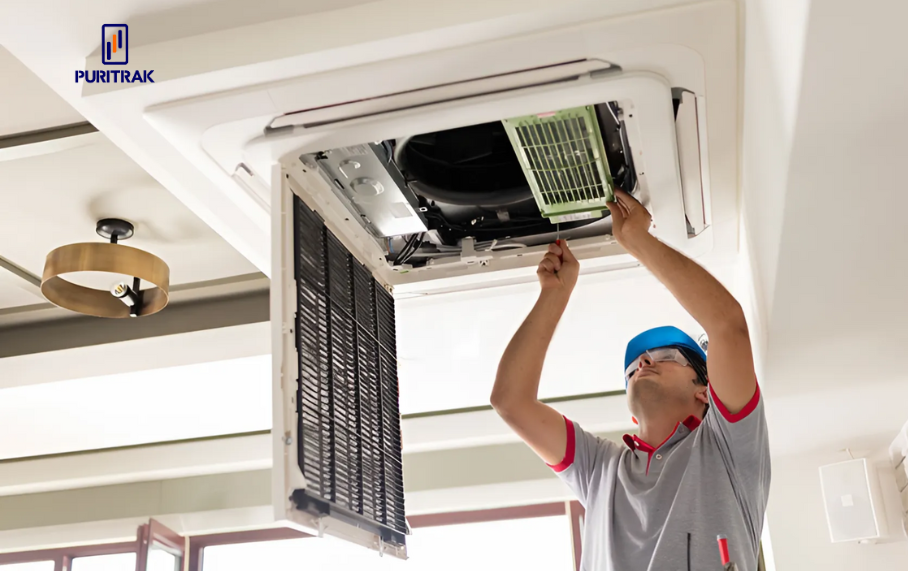
Many users mistakenly believe that a filter is just a simple mesh screen that can be reused indefinitely after a quick vacuum or wipe. However, this is a dangerous misconception for your health.
The structure of modern filters, especially HEPA filters, consists of millions of ultra-fine glass or plastic fibers randomly layered. They work through mechanisms of interception, impaction, and diffusion to trap microscopic PM2.5 dust particles. When the “gaps” between these fibers are filled with dust, bacteria, and mold, filtration efficiency drops significantly.
-
Protect Respiratory Health: A new filter removes 99.97% of fine dust, bacteria, and allergens.
-
Save Energy: A clean filter allows air to circulate easily, reducing the load on the motor.
-
Extend Device Lifespan: Prevents the machine from overheating due to overworking.
2. Filter Replacement Timeline
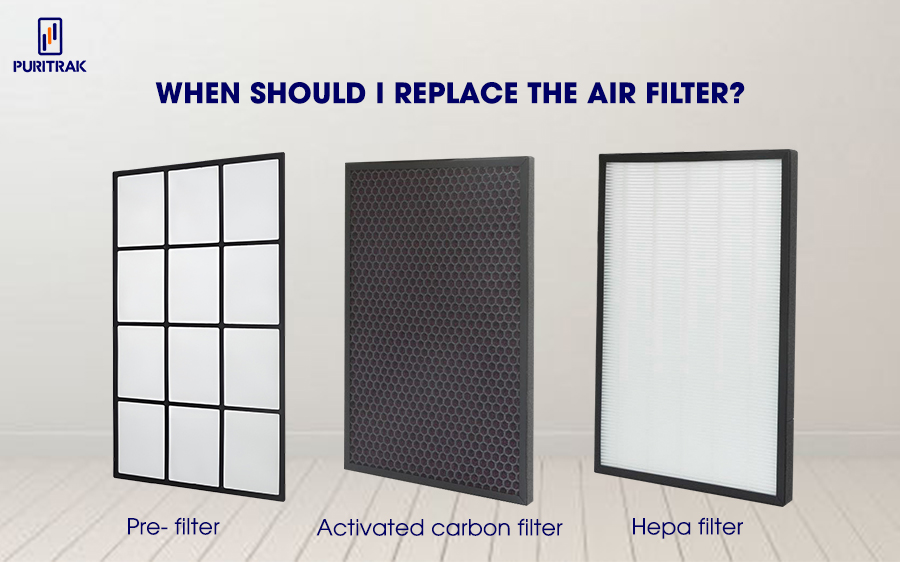
Each type of filter has a different structure and lifespan. Below is a quick reference table for recommended replacement times:
| Filter Type | Primary Function | Replacement Time | Proper Maintenance |
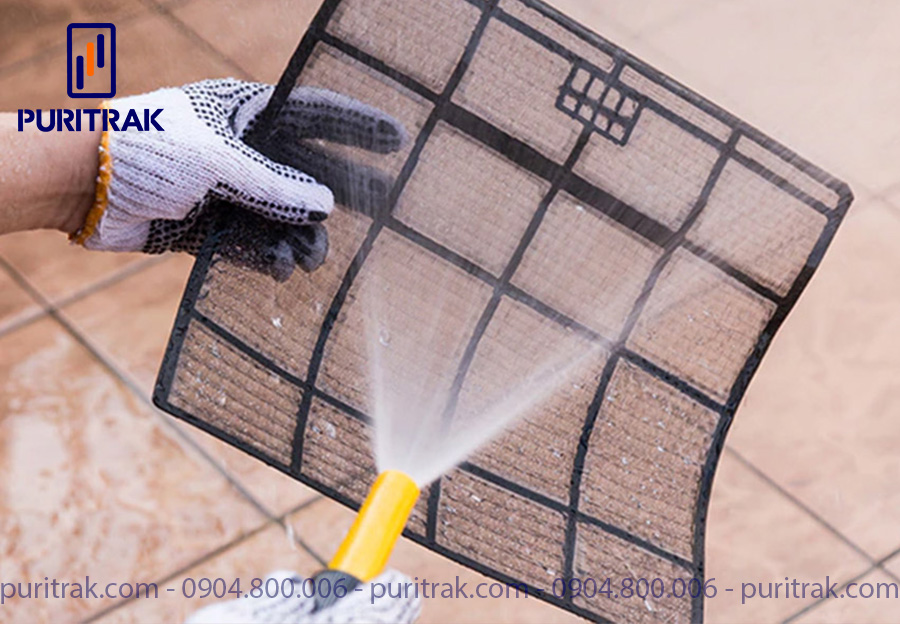
| Pre-filter | Captures hair, pet fur, lint, and large dust particles. | Permanent (Unless physically damaged) | Clean with water and mild soap every 2–4 weeks. |
| HEPA Filter | Removes PM2.5 fine dust, pollen, bacteria, and allergens. | 6–12 months (Depending on pollution levels) | Dry vacuuming only, use a soft brush. Never use water. |
| Activated Carbon | Neutralizes odors (food, smoke), absorbs VOCs and Formaldehyde. | 6–12 months (Replace when odors appear) | Dry vacuum the surface; can be exposed to light sunlight to reactivate. |
2.1. Important Notes from Puritrak Experts
- Regarding HEPA Filters: This is the most sensitive component. Leaving a dirty HEPA filter in place not only reduces efficiency but also allows bacteria to accumulate and recirculate into the room. When the filter turns dark gray or black, replace it immediately.
- Regular Cleaning: Washing the pre-filter frequently (every 2 weeks) is the most effective way to extend the life of the expensive HEPA and Activated Carbon filters inside.
- Specific Environments: If your home is near a construction site or you have many pets, the HEPA replacement time may be shortened to 4–5 months.
3. Factors Affecting Filter Lifespan

The 6–12 month figure is only an average estimate. The actual replacement frequency depends on three factors:
3.1. Air Quality Index (AQI) at Your Location
If you live in “pollution hotspots” like Hanoi or Ho Chi Minh City, or in apartments near main roads, industrial zones, or construction sites, the filter must work at extremely high intensity. In environments where the AQI is frequently above 150, the HEPA filter’s lifespan may be cut down to just 4–5 months.
3.2. Operating Frequency
A machine running 24/7 to maintain a clean space will accumulate dust much faster than one only turned on for 8 hours at night. Additionally, frequently using “Turbo” or “Auto” modes in polluted environments causes the filter core to saturate more quickly.
3.3. Room Size and Specific Conditions
-
Pets: Pet hair is the enemy of pre-filters and HEPA filters, as it builds up and blocks airflow.
-
Smoking/Cooking: Smoke and grease are highly adhesive. They not only clog the HEPA filter but also cause the activated carbon filter to lose its deodorizing ability quickly due to a thin oil coating.
-
Room Area: Using a small-capacity machine for a room that is too large will force the motor to overwork, causing the filter to degrade faster.
4. Signs It’s Time to Change Your Filter
Don’t wait until the machine makes strange noises or stops working. Watch for these “distress signals”:
-
Filter Reset Light Flashing: Most modern brands like Xiaomi, Sharp, Daikin, and Coway have timers or pressure sensors. When this light turns on, inspect or replace the filter immediately.
-
Visible Color Change in HEPA Filter: Open the cover and check. A new HEPA filter is usually pure white. When it turns light gray, dark gray, and eventually pitch black, it means dust has filled every corner.
-
Strange Odors from Air Outlet: If you smell sourness, dampness, or a musty odor when the machine is on, the activated carbon is saturated or mold has grown on the HEPA filter.
-
Decreased Filtration Efficiency: If the air still feels stuffy or family members continue to sneeze and have runny noses despite the machine running all day.
-
Weak Airflow and Increased Noise: When the filter is clogged, the air coming out will be weak even on the highest setting. The fan may also emit a whistling or louder-than-usual noise due to the effort required to pull air through.
5. Tips to Extend Filter Life and Save Costs
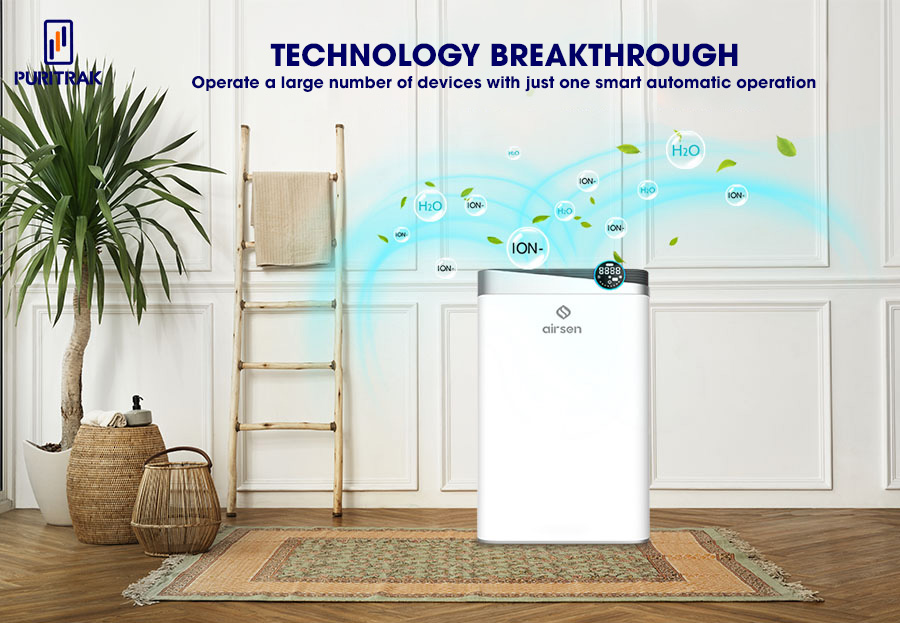
To optimize usage costs, Puritrak recommends:
-
Clean the pre-filter weekly: This is the first line of defense, keeping the internal HEPA filter clean for longer.
-
Use a vacuum cleaner: Use a small nozzle to gently clean surface dust on the HEPA filter (be careful not to tear the material).
-
Machine Placement: Place the machine at least 30cm away from walls and avoid hidden corners to ensure the best airflow circulation.
6. Puritrak – Specialized Air Quality Management Solutions
If you are concerned about your indoor air quality or aren’t sure if your filter needs replacing, Puritrak Environmental Solution JSC is your trusted partner. We don’t just sell devices; we provide comprehensive clean air solutions:
-
Smart Air Quality Monitors: Track PM2.5, HCHO, and CO2 indices in real-time via a mobile app.
-
AQM Filtration Solutions: Specialized systems designed for offices, schools, hospitals, and luxury apartments.
-
Professional Maintenance Services: We provide genuine filters for all brands on the market. Our technicians support deep cleaning and on-site filter replacement.
FAQ – Frequently Asked Questions
-
Can HEPA filters be washed with water? Absolutely NOT. Water destroys the fiber structure of the HEPA filter, removing its ability to trap fine dust. Only dry clean with a vacuum or soft brush.
-
Why is my “Change Filter” light on for a new machine? This could be due to a dirty dust sensor or an extremely polluted environment. Try cleaning the sensor and resetting the machine according to the manufacturer’s manual.
See more: Air Purifiers rental services
Puritrak products and services:
Contact information:
- Hotline: 0904.800.006
- Website: puritrak.com
- Email: [email protected]
- Fanpage: Puritrak